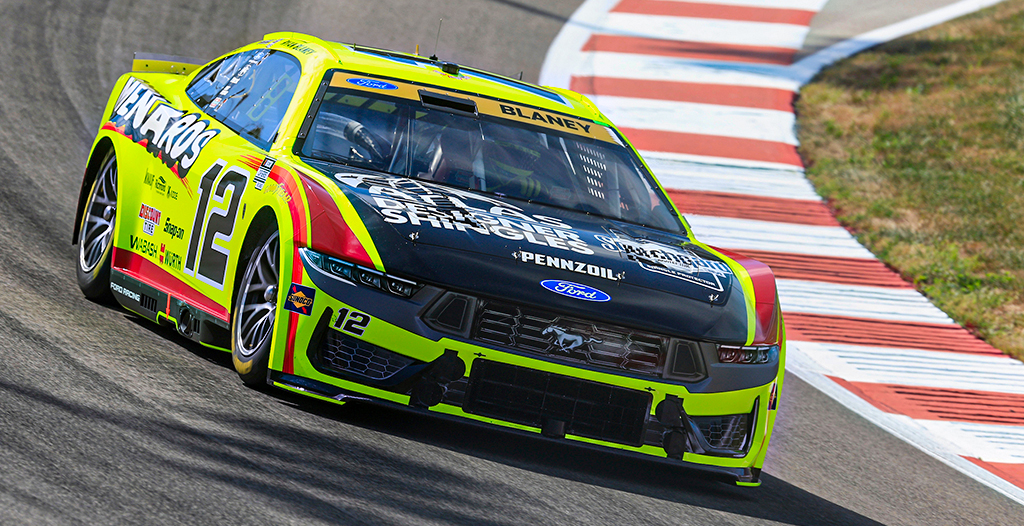
LEGENDARY HERITAGE, LASTING IMPACT: 2005 FORD GT TO BENEFIT THE RYAN BLANEY FAMILY FOUNDATION
October 27, 2025
NASCAR CHAMPION RYAN BLANEY NAMED OFFICIAL BRAND AMBASSADOR FOR TECOVAS
April 27, 2026HOW RYAN BLANEY IS BUILDING A BUSINESS BEYOND NASCAR
Most athletes say yes to everything. He built a strategy around saying no.
For most athletes, the off-track playbook is predictable — endorsements, appearances, and maybe a business or two attached to their name. For Nascar driver Ryan Blaney, it didn’t start that way. It started with something personal.
“Well, 2018 was when we started our foundation,” he shared with Inc. “I think that was kind of the first moment of, OK, we can use our platform for something that we’re passionate about.”
The cause — Alzheimer’s, dementia, and brain health — was tied to his family. His grandfather had gone through it. The work wasn’t abstract. It was shared.
“My foundation is called the Family Foundation for a reason,” he explained.
That structure — family-led and personally driven — became the starting point for everything that followed.
Not everything needs to be connected
From the outside, Blaney’s portfolio looks like a collection of moves:
- The Ryan Blaney Family Foundation
- Ten Runner Bourbon Whiskey
- Long-term sponsorships
- Reinvesting back into the sport
However, he doesn’t treat them as one thing. “I think a little bit of both,” he said when asked if it’s all connected.
Some ventures lean into his platform. Others deliberately avoid it. “With our bourbon, I didn’t want it to be Ryan Blaney, the Nascar driver’s bourbon,” he said. He wanted it to stand and grow on its own. “I wanted it to grow naturally by itself.”
That separation isn’t accidental. It’s selective.
The filter is personal, not strategic
When opportunities come in — and they do — Blaney doesn’t describe a formal framework. He described something simpler.
“I try to attach myself to things that I’m passionate about,” he said. That standard eliminates more than it includes. “I don’t ever want to be a part of something that I don’t really fully believe in … because then you’re not in all the way.”
That rule comes from his upbringing — thanks to a message his father, Dave, ingrained in him. “You gotta be 100 percent in,” he said, not 99.
That shows in how he spoke about partnerships, too. “I’ve just never really been a fan of ‘Hold up our product, we’ll cut you a check,’“ he said. The connection has to be real—something he already uses and understands.
“People are smart,” Blaney said. “They can tell if you’re being genuine or not.”
Growth that doesn’t happen all at once
Some of those relationships didn’t look the way they do now. BodyArmor, for example, was still early when Blaney got involved. Neither side looked the way it does today. “It’s been fun to grow together,” he said.
That growth didn’t happen quickly. There’s a tendency to expect momentum to show up early. To move faster than the work allows and validate the decision right away.
What gets left out matters
As more opportunities show up, the question becomes what to do with them. Blaney’s answer isn’t about adding more. It’s about protecting what’s already there.
“Racing is my number one priority,” he said. Everything else sits behind it. “If anything that I’m doing takes away from my main job, then I’m not doing it.”
The same applies outside of work. If it takes time away from his family, he’ll decline. That filter leads to decisions that don’t always make sense on the surface. “There are a lot of things I’ve turned down,” he said. Not because they weren’t good opportunities, but because they weren’t a good fit.
What holds it together
Across everything he’s built, the common thread isn’t scale or strategy. Its proximity. “I have a personal experience with it,” he said.
That shows up in different ways — family, interests, and long-term relationships. However, the connection is always there. “You have to be enjoying it or have a personal thing with it,” he said.
It’s less about expanding into new areas and more about staying close to what already matters.
What stays in place
Blaney doesn’t describe building something separate from his career. He described building around it carefully.
Choosing what connects — allowing some things to stand alone, saying no more often than yes. Most important, keeping the center intact because once that shifts, everything else does too. Not everything needs to grow at the same time. However, everything still must point back to the same place.